Navigating city streets with a massive load strapped to your trailer is a whole different game from dropping off a parcel at someone’s doorstep. Last-mile delivery for large freight in urban areas isn’t just challenging; it often feels like threading a needle in rush-hour traffic while juggling regulations, deadlines, and oversized logistics. These are the kinds of last-mile delivery challenges that logistics providers must learn to manage effectively.
Let’s walk through the real-world delivery challenges logistics providers face with heavy shipments in dense city environments. We will also share some of the best practices that can turn chaos into control.
Key Challenges in Last-Mile Delivery for Heavy Freight
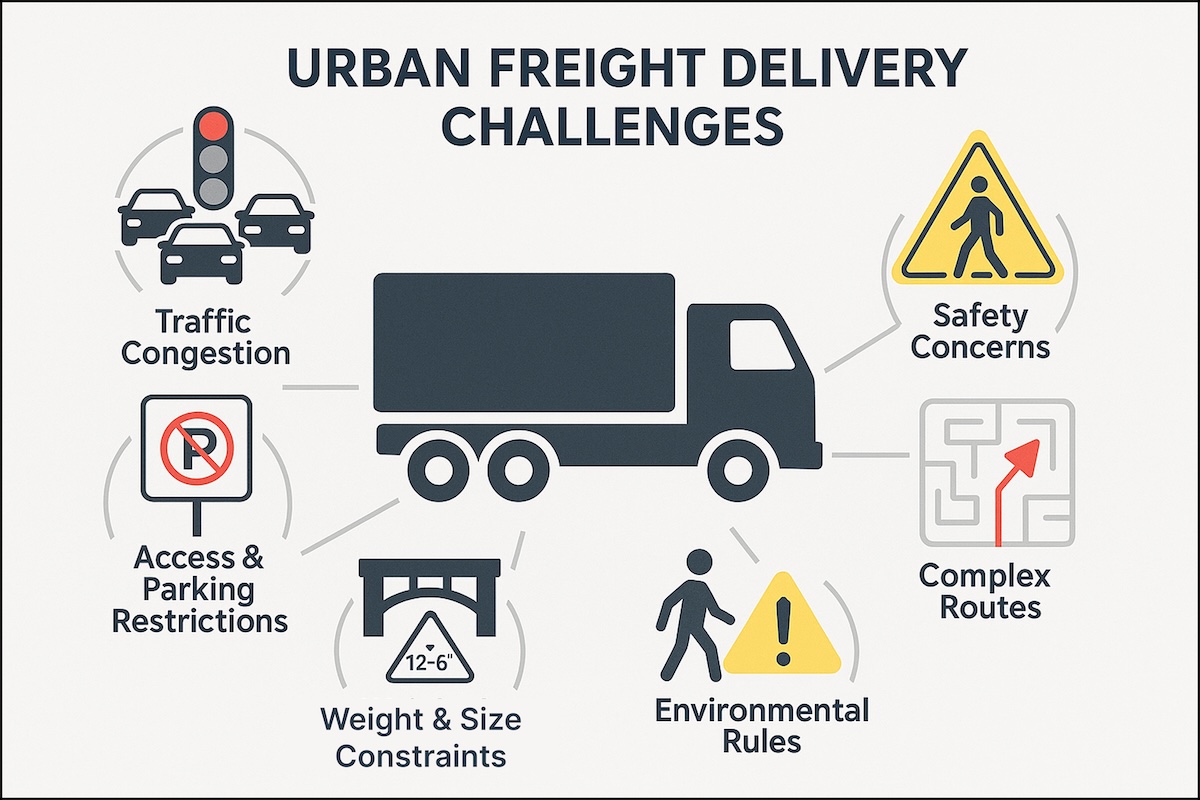
Below are the most common challenges companies face in last-mile delivery every day.
Key Challenges in Last-Mile Delivery for Heavy Freight
If you’ve ever tried to drive a 53-foot trailer into a packed downtown core during peak hours, you already know this: gridlock is brutal. And when delivery windows are tight, one delay can throw the whole schedule off. Unlike smaller vehicles, large trucks can’t simply squeeze through or reroute easily. Partnering with providers that offer expedited shipping solutions can help minimize the risk of delays.
Access and parking restrictions
Urban delivery often feels like a scavenger hunt for curb space. Cities rarely accommodate oversized vehicles, and regulations governing loading zones are usually outdated. Some areas outright ban trucks during certain hours, making planning more complex. Using cross-docking facilities helps reduce time spent in crowded areas by moving goods directly from inbound to outbound vehicles.
Weight and size constraints
Bridge limits, narrow lanes, sharp corners, and low-clearance underpasses are among the toughest last-mile delivery challenges when transporting heavy freight through crowded city streets. Maneuvering these vehicles requires special skill and, in some cases, even permits. Providers that use modern flatbed equipment can ensure that large cargo is handled safely and efficiently.
Safety and liability concerns
Urban areas are full of pedestrians, cyclists, and impatient drivers. Add a heavy freight truck into that mix, and the risks rise significantly. A wrong move doesn’t just mean property damage; it could lead to serious injury or lawsuits. That’s why hazmat transportation safety is so essential when handling sensitive or dangerous cargo.
Complex route planning
With GPS alone, you won’t get far. Real-time road closures, protests, construction zones, and changing traffic patterns all make urban last-mile delivery a logistical maze. Leveraging real-time GPS tracking and 24/7 dispatch ensures reroutes can be made instantly when obstacles appear.
Failed deliveries and re-attempts
Heavy loads usually require someone on-site to receive, inspect, and sign off. If the recipient isn’t ready or the address access is blocked, redelivery becomes an expensive and time-consuming problem. Reliable LTL services can reduce these failed attempts by improving scheduling and offering liftgate options.
Environmental regulations
Urban centers are tightening emission standards. Older diesel trucks might not even be allowed in certain zones. Compliance is no longer optional, especially as cities push toward greener logistics models. Initiatives that reduce fuel consumption and emissions are becoming essential.
Best Practices & Last-Mile Delivery Solutions
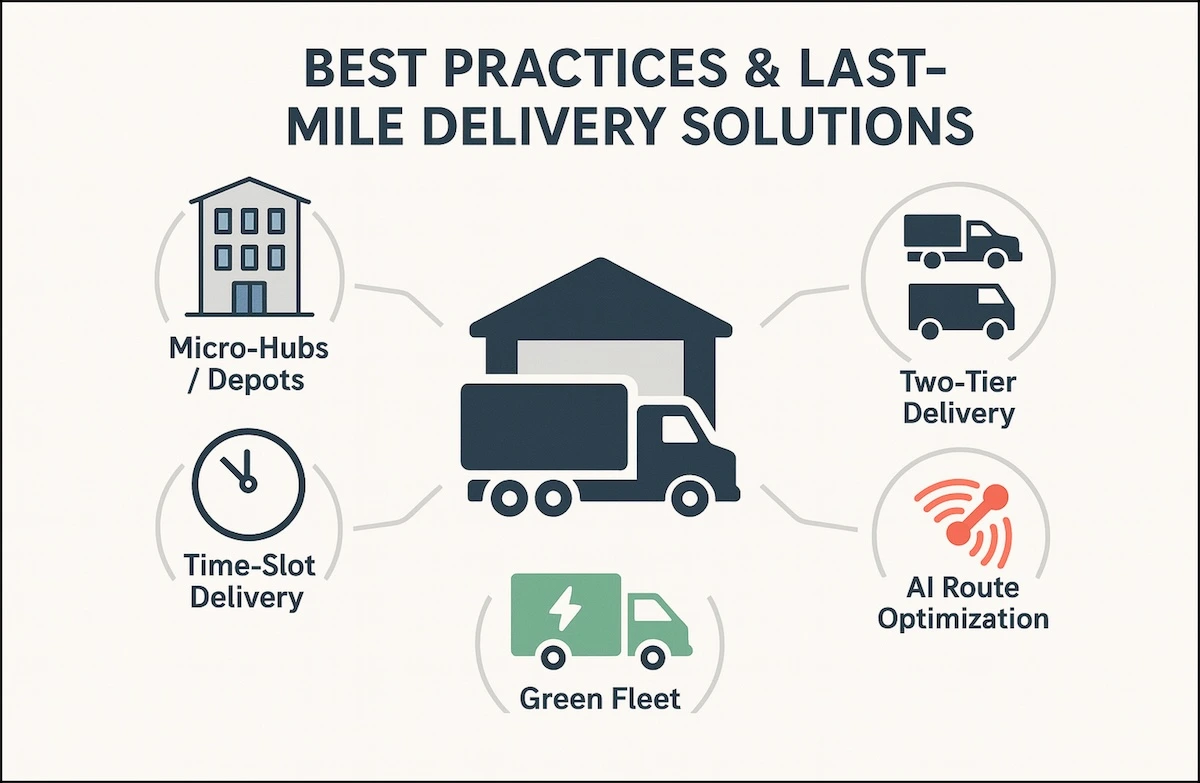
Now that we’ve unpacked the harsh realities of last-mile delivery challenges for heavy freight, it’s time to explore what actually works. These methods are practical and proven to help logistics teams handle the urban grind more effectively.
Use micro-hubs and satellite depots.
By placing warehousing and distribution centers closer to city centers, companies can reduce travel time and congestion delays. From these hubs, smaller vehicles, such as electric vans, can handle the final stretch, improving delivery speed and reliability.
Implement two-tier delivery models.
Think of it like a relay race. A long-haul truck delivers freight to a regional center, and then a smaller, urban delivery vehicle takes over for the last few miles. This not only eases access but also aligns with municipal delivery rules.
Use dynamic route optimization.
AI-powered logistics platforms can analyze traffic in real time and adjust routes accordingly. This helps avoid delays, reduce fuel usage, and keep delivery promises intact.
Equip vehicles with specialized tools.
Lift gates, pallet jacks, and adjustable ramps are not luxuries in this scenario. They are necessities for unloading safely and efficiently, especially when curb access is tight or building entrances are elevated.
Use 24/7 dispatch and real-time tracking.
Having round-the-clock logistics support improves coordination, especially when delays or emergencies hit. Real-time tracking offers transparency and builds customer trust.
Go green with your fleet.
Upgrading to electric or low-emission vehicles is no longer just a PR move. It’s a business decision. Many cities now limit or charge penalties for older, high-emission vehicles. Training programs by Trucking Academy teach companies to build skilled teams while committing to greener operations.
Train your urban delivery crews.
Operating in city environments requires a special skill set. Train drivers to navigate tight turns, manage unloading in pedestrian-heavy zones, and handle unexpected on-site changes with professionalism.
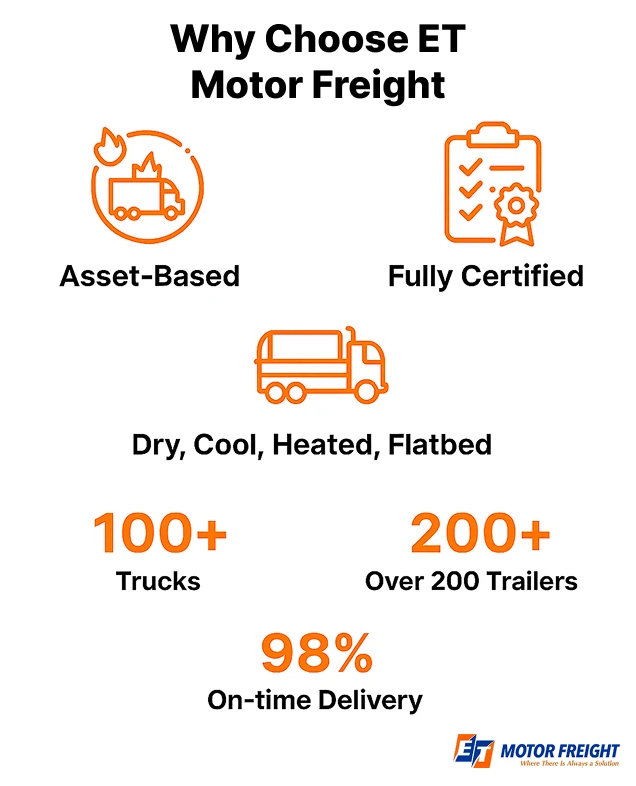
👉Looking for a trusted partner to help you master these challenges? ET Motor Freight can support your logistics needs. Feel free to get in touch today.
Conclusion
Heavy freight doesn’t travel the last mile on good intentions. It takes planning, investment, and a deep understanding of how urban environments operate. By identifying key challenges and applying proven best practices, logistics providers can take last-mile delivery from a liability to a strength. With cities evolving and regulations tightening, staying ahead with innovative logistics and certified, sustainable solutions isn’t optional. It’s essential.
Frequently Asked Questions
1. What are the main challenges in last-mile delivery?
The biggest ones include traffic congestion, access restrictions, regulatory complexity, high costs, and lack of visibility. For large freight, you also have to consider maneuverability, delivery site readiness, and the need for special equipment or handling protocols.
2. How do challenges differ for heavy freight vs. parcels?
Parcel delivery typically relies on nimble vehicles and quick drop-offs, while heavy freight involves oversized loads, specialized handling, and stricter regulations. It also requires more space, time, and sometimes permits just to make the final delivery.
3. How can companies control costs in urban last-mile delivery?
By consolidating deliveries, leveraging off-peak hours, using data forecasting, and adopting green technologies, companies can reduce unnecessary trips, lower fuel costs, and stay compliant with city rules.