What’s the one thing that keeps logistics managers up at night? It’s not the freight itself; it’s the unpredictable disruption: the sudden customs backlog, the unexpected blizzard, or the miles-long traffic jam. For cargo like critical manufacturing components or specialized freight requiring temperature-controlled reefers and trailers, these unforeseen events don’t just cause minor delays; they trigger major financial setbacks and expose the core vulnerability of global supply chains.
The good news? The entire logistics industry is moving past simply reacting to these crises. This fundamental shift is powered by Artificial Intelligence (AI). AI tools are no longer speculative technology; they are actively analyzing mountains of real-time data on traffic, weather, and customs to foresee disruptions hours or even days before they materialize. This transformation from reactive to predictive logistics is rapidly becoming standard practice, with industry research confirming that most transportation leaders view AI as critical for future growth. This is why investing in AI for logistics is now essential.
This article explores how these AI-driven predictive technologies function, why they are essential for modern logistics, and how they are reshaping transportation to create smarter, more reliable shipping solutions.
What is AI in Freight Logistics?
Artificial intelligence in logistics refers to advanced software designed for intelligent decision-making, separate from simple automation.
AI in logistics is a continuous learning system. It studies a vast amount of transportation data, encompassing both historical records and real-time information. Its primary objective is to recognize complex patterns, forecast future demand, predict potential disruptions, and instantly recommend the most efficient course of action. Ultimately, these capabilities distinguish a modern AI logistics company.
This intelligent software provides three core functions that significantly enhance service quality:
How AI Predicts Traffic, Weather & Border Delays
The accuracy of these forecasts is directly dependent on the volume and diversity of data fed into the system. This comprehensive analysis allows us to offer effective AI logistics solutions.
Predictive models rely on diverse data sources, including:
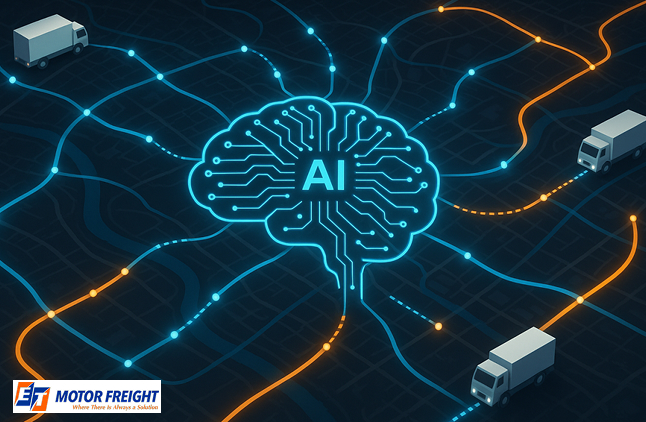
The AI system utilizes this information for predictive modeling to forecast route conditions hours or days in advance. It can anticipate slowdowns due to construction, forecast specific border wait times, and accurately estimate the impact of severe weather on a long-haul journey.
This capability enables dynamic route planning. When the AI detects a problem, it instantly reroutes the shipment around congestion or customs delays. Industry data shows that dynamic routing reduces late shipments and decreases delivery times by up to 20%.
Why Predictive Technologies Matter for Supply-Chain Efficiency
The adoption of predictive logistics signifies a shift toward building resilient and managed operations, transforming a provider into a modern AI-forwarding company.
The operational benefits are substantial:
These operational improvements lead directly to client cost savings. Surveys indicate that AI-enabled supply-chain management can reduce logistics costs by 15%, improve inventory levels by 35%, and enhance service levels by 65%.
Industries That Benefit from AI-Powered Freight Forecasting
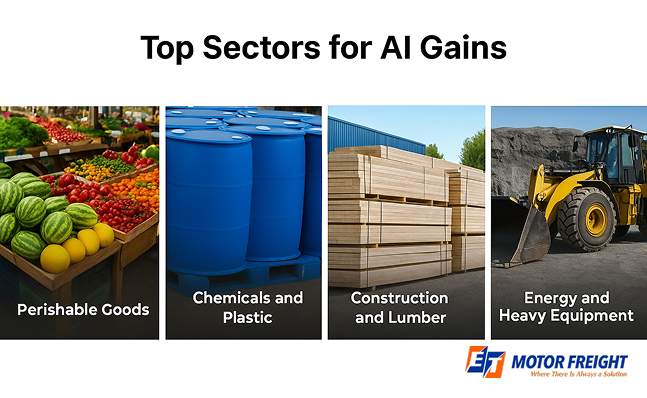
While all sectors gain from efficiency, certain industries experience immediate and profound benefits from AI freight optimization:
Conclusion
AI has fundamentally transformed logistics, turning simple hauling into predictive science. Through advanced freight optimization, the technology enhances reliability by forecasting traffic and delays before they occur.
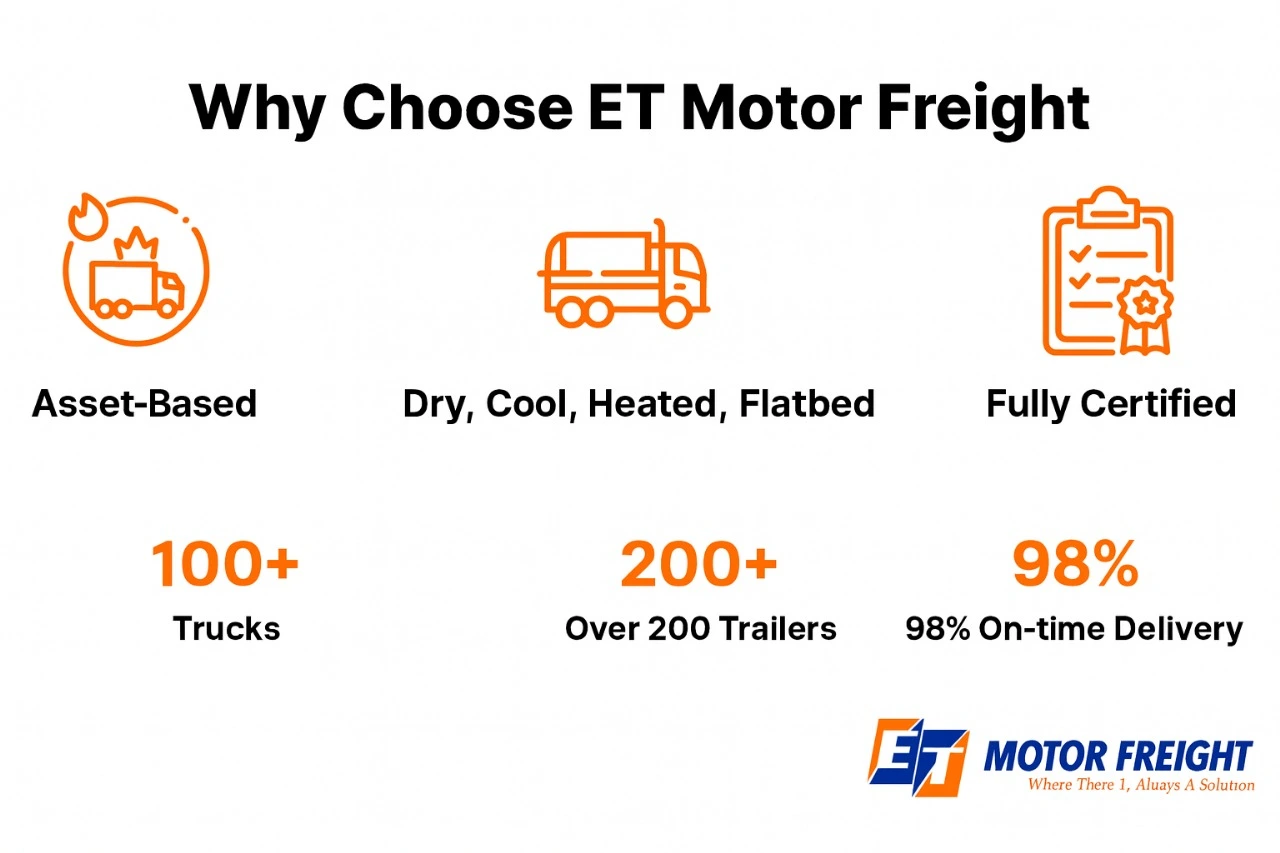
ET Motor Freight operates as an asset-based service, ensuring direct control over equipment and resources, which is essential for successfully deploying predictive AI solutions for logistics. This strategic blend of control and technology offers clients a smarter, more resilient shipping experience.
Ready to gain a competitive edge with predictable, optimized freight? Get a fast, free quote today.
Frequently Asked Questions
1. What is AI in freight logistics?
AI in freight logistics refers to intelligent systems that analyze historical and real-time data, such as sales trends, weather, and port activity, to forecast demand, optimize routes, and automate complex planning decisions for maximum efficiency.
2. How does AI help predict traffic, weather, and border delays?
Predictive models combine live traffic feeds, satellite weather data, and real-time border-crossing information to accurately estimate transit times and recommend alternate routes. This dynamic routing significantly reduces late shipments and consistently improves delivery times.
3. Why are predictive technologies important for supply-chain efficiency?
They are crucial because they dramatically improve forecast accuracy, reduce operational costs, and build resilience by allowing for proactive adjustments. An AI-enabled supply chain can cut logistics costs by about 15% and boost service levels by 65%.
4. Which industries benefit most from AI-powered freight forecasting?
Industries with time-sensitive or sensitive cargo, such as perishable goods, manufacturing, retail/e-commerce, and heavy industry, gain the greatest advantage from predictive routing and demand forecasting.
5. Can AI help optimize trucking routes in real time?
Yes. AI systems constantly analyze traffic, weather, and fuel data to recommend dynamic routes and adjust them on the fly throughout a trip, constantly working to minimize delays and save money.
6. What data does AI use to forecast freight conditions?
AI models process a wide variety of essential datasets, including telematics from trucks, GPS data, sensor readings, weather forecasts, port congestion statistics, customs wait-time reports, and market demand signals.