What should you do if your freight arrives damaged, missing, or incomplete?
The answer is to act quickly, document the issue, and follow the proper freight claim process. A freight damage claim allows shippers to seek compensation when cargo is compromised during transportation. Taking the right steps early can improve the chances of a successful claim outcome.
However, even legitimate claims can be denied if deadlines are missed, documentation is incomplete, or shipment issues are not reported correctly. Understanding how the freight claims process works is essential for protecting your business from unnecessary costs and supply chain disruptions.
This guide explains how to file a freight claim, prevent shipping damage, and resolve freight issues.
What Is a Freight Damage Claim?
A freight damage claim is a formal request for compensation when cargo is damaged, lost, delayed, or arrives incomplete during transportation.
The most common types of freight claims include:
Understanding the type of claim you’re dealing with is the first step toward filing the correct documentation and resolving the issue efficiently.
Immediate Steps to Take When Freight Arrives Damaged
The first few minutes after delivery can determine whether your freight damage claim succeeds or fails.
1. Inspect Freight Before Signing
Always inspect shipments before signing the Bill of Lading (BOL) or Proof of Delivery (POD).
Look for:
Signing without inspection can make it harder to prove that the damage occurred during transit.
2. Document Everything
Take clear photos of:
For cross-border shipments, keep copies of supporting shipping documents such as the Certificate of Origin and customs paperwork. These records can help verify the shipment’s value and support the freight claim process.
3. Note Damage on Delivery Documents
If damage is visible, record it directly on the BOL or POD before signing. Avoid vague notes such as “subject to inspection.” Be specific about what is damaged or missing.
For example:
Clear delivery notes help support your damaged freight claim if the carrier later reviews the shipment record.
How to File a Freight Claim
Many claims are denied because of missing paperwork or missed deadlines. Following a structured freight claims process improves your chances of recovery.
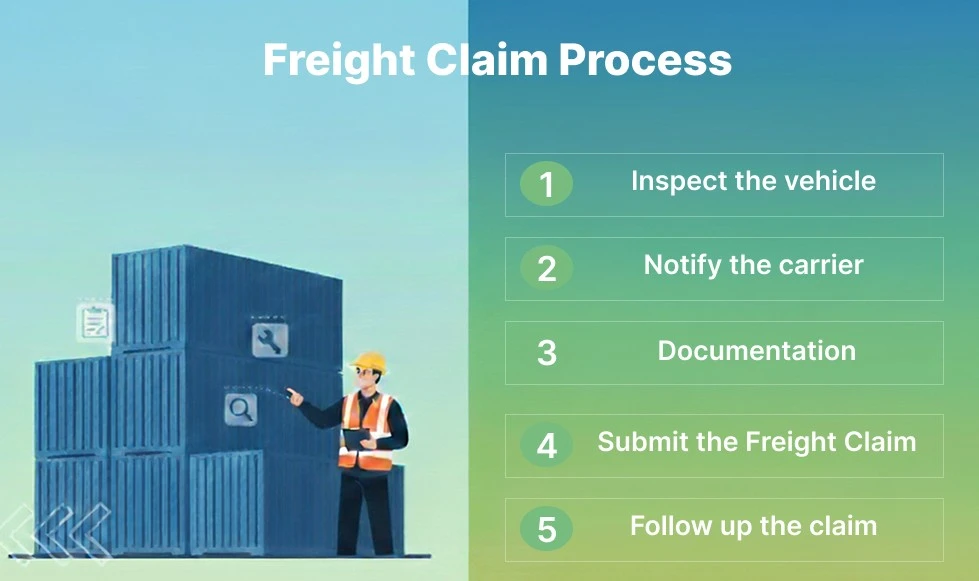
Step 1: Notify the Carrier
Contact the carrier immediately after discovering damage.
For concealed damage, notification should occur as soon as possible after delivery. Prompt communication demonstrates that the damage likely occurred during transit.
Step 2: Gather Freight Claim Documentation
Successful freight claim documentation typically includes:
Missing documents are one of the leading causes of denied freight damage claims.
Step 3: Determine the Claim Value
Calculate the actual financial loss caused by the damaged, lost, or missing freight.
This may include:
Supporting invoices, receipts, and cost records can help justify the amount being claimed and reduce disputes during the review process.
Step 4: Submit the Freight Claim
Submit the claim using the carrier’s official claim form, online portal, or designated claims department. Clearly explain:
Proper freight claim filing requires complete and accurate documentation. Before submitting, review all documents carefully to ensure the claim package is complete. Incomplete submissions often result in delays or requests for additional information.
Step 5: Monitor the Claim
Keep records of all communications. Track:
Regular follow-up helps keep the claim moving forward and allows you to address any questions before they become obstacles to resolution.
Key Legal Timeframes and Regulatory Considerations
Your success hinges on respecting these non-negotiable legal timelines.
|
Requirement |
Timeframe |
|
Notice of loss, damage, or delay |
Must be given in writing to the carrier within 60 days after delivery.a |
|
Filing deadline for total loss claims |
Within nine months from the date of shipment. |
|
Final statement of claim |
Must be filed within nine months of shipment. |
|
Concealed damage notice |
Typically, within 24 hours of delivery. |
Table Content: Summary of Canadian freight claim legal deadlines
Final Thoughts
Filing a freight damage claim in Canada involves a clear, legal path defined by strict deadlines and documentation. By inspecting freight carefully, documenting damage, and notifying carriers promptly, businesses can improve their chances of a successful claim outcome.
Working with the right logistics partner can make this process faster and more efficient. ET Motor Freight helps businesses simplify cross-border shipping with reliable support and clear guidance.
Contact ET Motor Freight to get a tailored quote and a clear plan for your shipments.
Frequently Asked Questions
1. What documents are needed for a freight claim?
The most essential documents include a statement of loss, the original Bill of Lading (with damage notes), the commercial invoice (as proof of your cost), and the paid freight bill. Don’t forget clear photographs and any official inspection reports.
2. How long does a freight claim take in Canada?
One should file the final freight claim within nine months of the shipment date. Once filed, carriers usually try to resolve the claim within a few months. However, complex claims or those involving multiple carriers can take longer.
3. How to file a freight damage claim in Canada?
The process is simple if you stick to the steps:
- Inspect the freight on arrival and note damage on the Bill of Lading.
- Send a written Notice of Intent to claim within 60 days of delivery.
- Gather all documents, especially proof of value and the paid freight bill.
- Submit the complete claim to the carrier within the nine-month deadline.
- Hold onto the damaged goods until the claim is resolved.
4. How can I prevent freight shipping damage?
Proper packaging, secure palletization, accurate labeling, and working with an experienced carrier can help reduce the risk of freight damage during transit.
5. How long do I have to file a freight damage claim?
Filing deadlines vary by carrier and shipment type. For this reason, it’s important to report damage and begin the freight claim process as soon as possible
6. What is a shipping damage claim?
A shipping damage claim is a request for compensation when goods are damaged during transit. It typically requires supporting documentation and evidence showing the damage occurred while the shipment was in the carrier’s possession.